

Parents making a temporary family visit generally use the Standard Visitor route. The appropriate route should be checked against the purpose and circumstances of their travel.
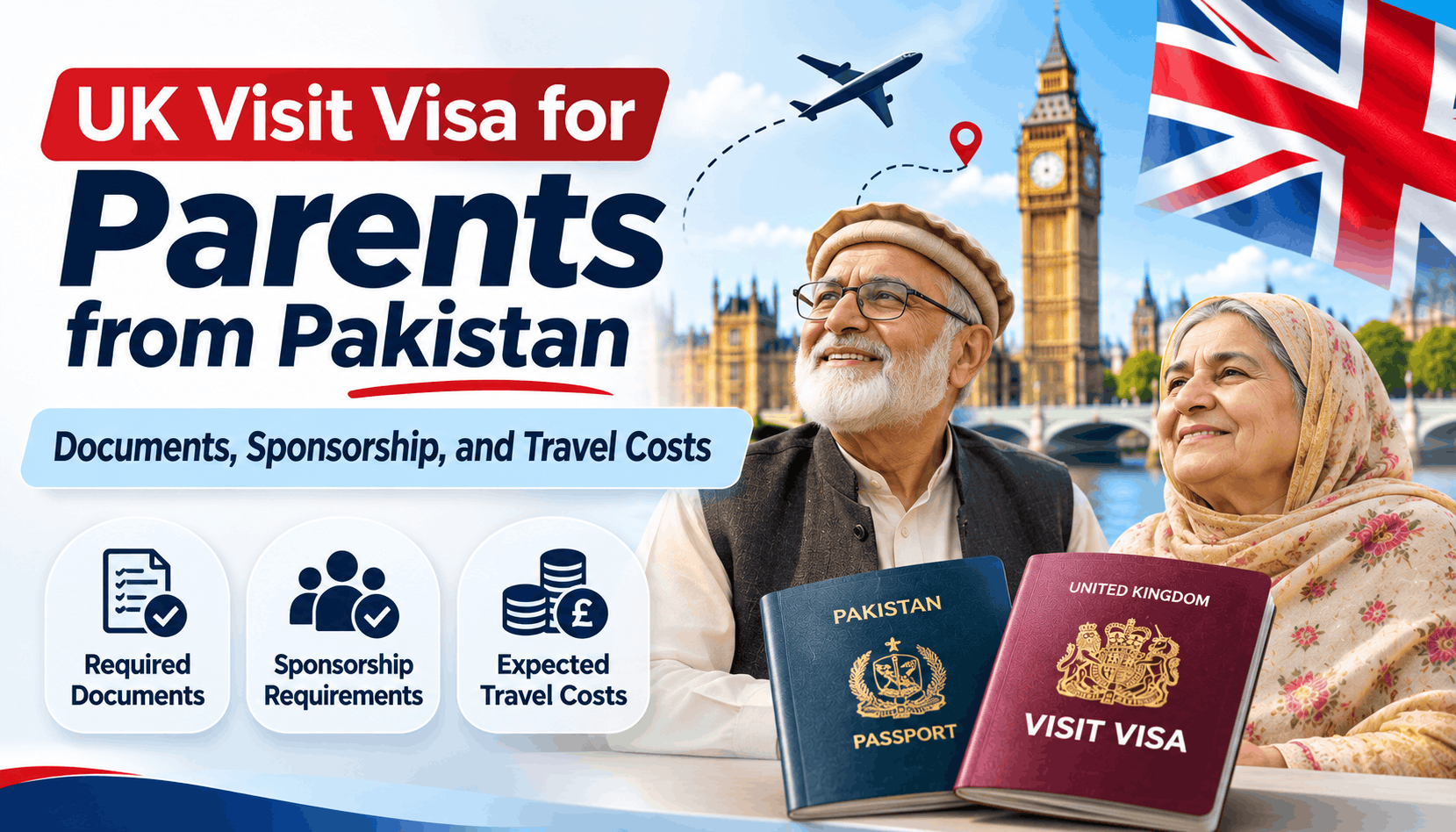
UK Visit Visa for Parents from Pakistan: Documents, Sponsorship, and Travel Costs
Reviewed By:
 Syed Adeel
 Syed Adeel
Syed Adeel Hassan Shah is the CEO and Senior Visa Consultant at AHS Consultants and Legal Advisors, serving as CEO since the company’s incorporation in 2022. An LLB graduate of the University of the Punjab, he has worked in visa consultancy and visa-related case support since 2014.
- Last Update: November 12, 2026
Table of Contents
Planning a UK visit visa for parents from Pakistan often starts with a simple wish: spending time together as a family. Your parents may want to attend a graduation, meet a grandchild or enjoy a few weeks with you.
The application becomes easier to organise when you answer three questions clearly. Why are they visiting? Where will they stay? Who will pay?
This guide explains how to prepare a family visit application, organise the parents’ and host’s evidence, and build a realistic travel budget.
Which Visa Do Parents Need to Visit the UK?
Parents travelling on Pakistani passports generally need a visa before a short UK family visit. The Standard Visitor route is the usual route for visiting relatives, subject to meeting its requirements.
Visitors must be able to explain their temporary plans, show that the trip is affordable and establish that they will leave afterwards. Visits are usually permitted for up to six months. Frequent or successive visits must not make the UK their main home.
Choose dates that reflect the actual family occasion and available budget. If the plan is a three-week visit, explain that schedule rather than automatically requesting the longest possible stay.
Can Both Parents Apply Together?
Each parent needs a separate application and pays their own visa fee. Each also needs their own visa application centre appointment.
Prepare the two applications side by side so shared facts agree. Check travel dates, the host’s address and payment arrangements. Each parent’s personal and financial details should still accurately describe that individual.
Documents for a UK Visit Visa for Parents from Pakistan
A passport valid for the visit is essential. The rest of the evidence should support the circumstances described in the application. UKVI provides examples of supporting documents, and the appropriate selection depends on the applicant.
Use the following table to organise relevant records. The optional examples are practical suggestions, not a universal mandatory checklist.
| Document or record | Whose evidence? | Purpose |
|---|---|---|
| Valid passport | Each parent | Identity and travel-document details |
| Relevant financial records | Parent or person paying | Explain available funds and their source |
| Pension or retirement records, where relevant | Retired parent | Explain current circumstances and income |
| Employment or business records, where relevant | Working parent | Explain ongoing work and earnings |
| Invitation and accommodation details | Child or host in the UK | Explain the family visit and proposed stay |
| Suitable relationship evidence | Parent and child | Support the relationship described |
| Host's identity and UK status evidence | UK host | Support the host's details and circumstances |
| Evidence of promised financial support | Person paying | Explain how agreed costs will be covered |
For relationship evidence, use a relevant official record showing the parent-child link, such as a birth record or suitable family registration document. Choose the record that accurately establishes the relationship in your case.
Check Translations and Name Differences
UKVI requires documents outside English or Welsh to have a full, independently verifiable translation containing the specified translator and certification details.
Compare names across passports and family records. If there is a spelling variation, gather the records that explain it and ask how it should be addressed. Do this before filling out both parents’ forms.
Can a Child Sponsor Their Parents' UK Visit?
A child can provide accommodation or financial support when the visitor sponsorship conditions are satisfied. The rules consider whether the relationship is genuine, whether the supporter can and will provide the promised help, and whether they comply with immigration requirements.
Be precise about what “sponsorship” means for your family. Perhaps the parents pay for flights, and their child provides accommodation. Alternatively, the child may cover the entire trip.
Explain Who Pays for Each Expense
Prepare a shared cost list before completing the applications.
| Expense | Example payment arrangement |
|---|---|
| Visa fees | Parents pay from their own funds |
| Return flights | Adult child pays |
| Accommodation | Parents stay at the child's home |
| Food and local transport | Adult child covers these costs |
| Personal purchases | Parents use their own spending money |
These are examples. Replace them with your actual agreement and keep the explanation consistent across the forms, invitation and financial records.
A useful question for the person paying is whether the promised support fits their existing household expenses. UKVI considers the supporter’s ability to fund the visitors while maintaining themselves and their usual dependants.
What Should an Invitation Letter Include?
A straightforward invitation can explain the host’s name, contact details, address, relationship to the parents, proposed visit dates and purpose. It should also describe accommodation and the specific expenses the host agrees to cover.
For example, a fictional host might write:
“I would like my parents to visit me for three weeks in June. They will stay with me at my home. I will pay for their return flights, meals and local transport. They will cover their visa fees and personal purchases.”
Adapt the wording to the real arrangements. Check that the dates and amounts match the applications. Ask the host to confirm everything before the letter is finalised.
How Much Bank Balance Do Parents Need?
UKVI does not prescribe one fixed bank balance for all visitors. It assesses the likely cost of the proposed visit, available resources and the applicant’s circumstances. Declared income, deposits and support should correspond with the financial evidence.
Start with the actual trip budget. Then identify which funds are available to cover it and who owns them. If a bank entry needs explaining, retain the records that show where the money came from.
What if a Parent Is Retired or Has No Salary?
Explain their real circumstances, including retirement, pension income, savings or family support where relevant. The visitor rules allow qualifying third-party support, so a child’s contribution can form part of the funding arrangement.
For preparation, write a short summary of how the parent normally meets household expenses. This helps the family describe the proposed visit accurately without treating every parent’s situation as identical.
UK Visit Visa Fees and Travel Costs
As checked on 10 November 2026, the published fee for a Standard Visitor visa of up to six months is £135 per person. That makes the government visa fees £270 for two parents.
The amount charged in Pakistan can change with the Home Office’s local-currency pricing. Check the official Pakistan fee tool and the application payment screen before paying.
Illustrative Budget for Two Parents Visiting for Three Weeks
The table below is a fictional planning example with parents staying at their child’s home. Apart from the government visa fee, the figures are assumed allowances rather than researched prices or required minimums.
| Cost item | Example for two parents |
|---|---|
| Standard Visitor visa fees | £270 |
| Return flights | £1,400 |
| Paid accommodation | £0 because they stay with family |
| Additional food and household costs | £300 |
| UK transport and outings | £250 |
| Travel insurance allowance | £150 |
| Pakistan travel and document preparation | £100 |
| Contingency | £200 |
| Total illustrative budget | £2,670 |
Obtain actual flight and insurance quotations for the travellers’ dates and circumstances. Add accommodation if they will use a hotel. Also include any separately charged appointment services, optional priority processing or consultancy fees you choose.
Keep the trip estimate separate from the parents’ ordinary expenses at home. If one parent travels alone, calculate the costs again rather than simply dividing every amount in half.
How to Prepare the Application Step by Step
1. Agree the Visit Plan
Write down the purpose, dates, address and people travelling. For a graduation or another family occasion, record the relevant date and make the planned visit proportionate to it.
2. Collect Relevant Evidence
Create a folder for each parent and a shared host folder. Give files clear names, such as “Mother passport” or “Host support letter.” Check that scans are complete and readable.
3. Complete and Review Each Application
Applications are made online, with the earliest submission generally three months before travel.
Review each answer with the parent concerned. If an adult child helps type the form, the parent should still understand the declared plans, funding and personal history.
4. Follow Appointment and Document Instructions
Follow the instructions issued for identity verification, biometrics and document submission. GOV.UK gives a usual decision time of three weeks after the online application, identity verification and documents are completed. Individual cases can take longer.
Allow time for corrections and questions. Keep application confirmations, submission records and university or family-event information together where relevant.
Final Checks Before Submitting
Small inconsistencies are easier to resolve before submission. Review the family’s records together and check:
- Both applications use the same shared travel dates and host address.
- Each parent’s personal circumstances are described accurately.
- The invitation agrees with the declared payment arrangements.
- The person promising support has supplied relevant evidence.
- Any previous refusals are answered accurately wherever requested.
- Financial figures and unusual entries have clear explanations.
- Translations and scanned pages are complete.
- The proposed visit has a clear end date.
Read the documents as someone unfamiliar with your family. If a claim needs an explanation, decide which short note or record would make it clearer.
Get Help with Your Parents' UK Visit Visa Application
A family visit should begin with a clear plan that everyone understands. If you need help organising the parents’ circumstances, host support and travel budget, AHS Consultants provides visit visa application support, including document preparation.
Prepare the parents’ passport details, intended dates and a simple explanation of who will pay. The team can discuss the next steps and the documents relevant to the proposed visit.
Explore AHS visit visa services
Request a consultation for your parents’ UK visit visa application.
Frequently Asked Questions
Is There a Separate UK Parent Visit Visa?
Does an Invitation from a British Child Guarantee Approval?
UKVI assesses each parent's eligibility. A host's invitation supports the explanation of the trip, while the applicant must still meet the visitor requirements.
Can Parents Stay with Their Child Instead of Booking a Hotel?
Staying with family can form part of the proposed accommodation arrangements. Explain the address, host relationship and support clearly, with relevant evidence.
Can Parents Apply for a Longer-Term Visitor Visa?
Long-term Standard Visitor visas are available for two, five or ten years. They generally allow stays of up to six months on each visit. UKVI may grant a shorter period than requested.
Can Parents Apply for a Longer-Term Visitor Visa?
Long-term Standard Visitor visas are available for two, five or ten years. They generally allow stays of up to six months on each visit. UKVI may grant a shorter period than requested.
Should We Buy Flights Before the Visa Decision?
UKVI cautions that providing supporting documents does not guarantee approval and advises applicants to bear this in mind when making bookings. Use realistic travel estimates while preparing the application and check cancellation terms before committing money.
References
View Official Government Sources & References
Refer to the following official UK government sources for visitor visa rules, supporting documents, application fees and processing guidance.
- UK Government. Immigration Rules — Visitor Visa National List .
- UK Government. Standard Visitor Overview .
- UK Government. Apply for a Standard Visitor Visa .
- UK Visas and Immigration. Visitor Supporting Documents .
- UK Government. Immigration Rules — Appendix V Visitor .
- UK Visas and Immigration. Visit Caseworker Guidance .
- UK Home Office. Immigration and Nationality Fees from 8 October 2026 .
- UK Home Office. Pakistan Visitor Visa Application Fees .
- UK Government. Visitor Processing Service Standards .
Share this Post
Explore More News and Updates About Visas




Why You Can Trust Our Expertise
- Expert Guidance – Professional advice tailored to your visa and legal needs.
- Personalized Support – Solutions based on your individual circumstances and goals.
- Clear & Transparent Advice – Straightforward guidance with no unnecessary complexity.
- Up-to-Date Knowledge – Guidance based on current immigration rules and requirements.
- Attention to Detail – Careful review of documents and application requirements.
- Trusted & Confidential Service – Your information is handled professionally and securely.